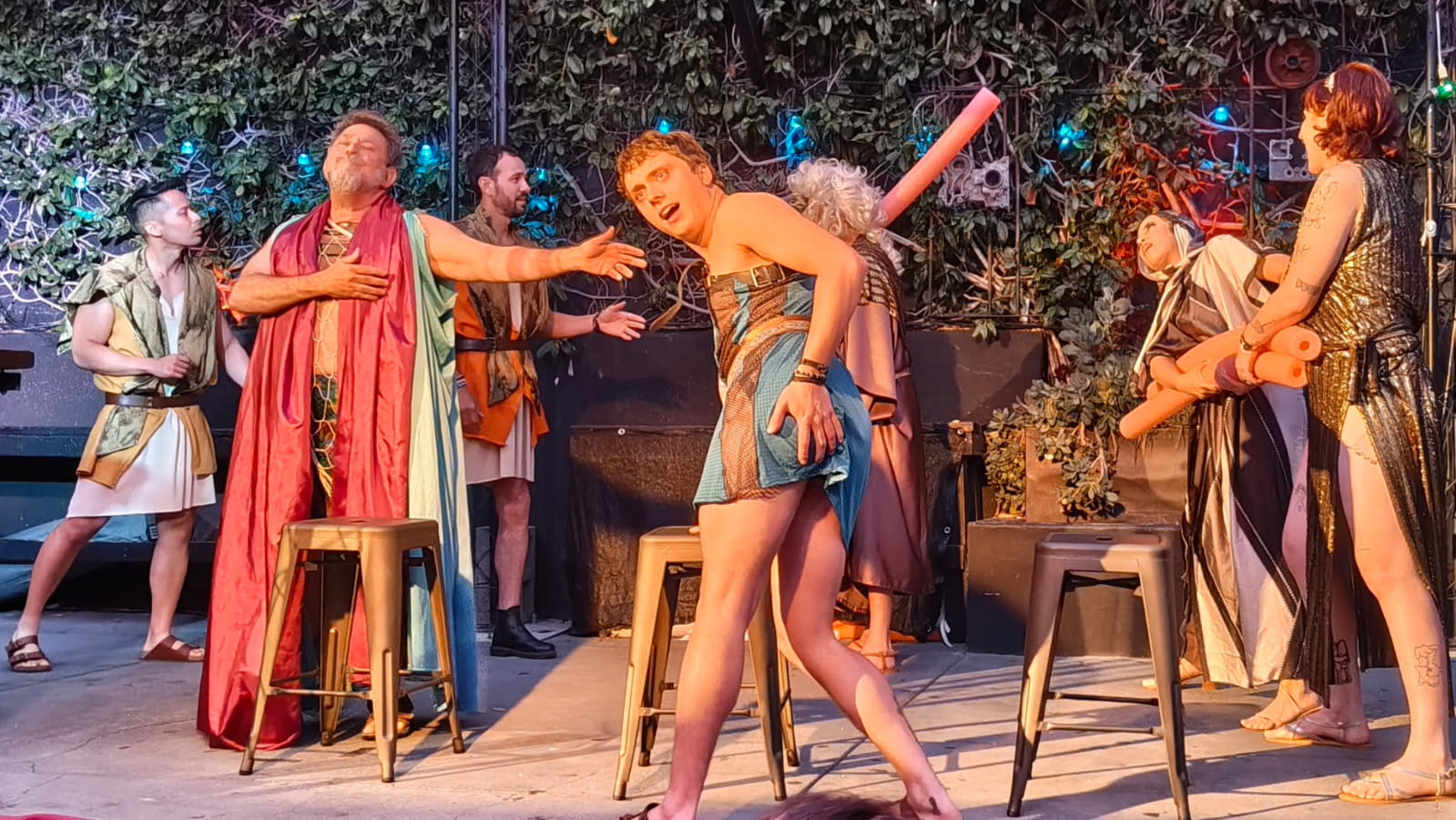
category: full-length play
genre: Roman comedy
running time: Just under two hours
setting: Rome for the First Act; Outside of Rome for the Second
period: The Beginning of The End of the Roman Empire
characters:
Encolpius, a young-ish, rich-ish, handsome-ish Roman gentleman
Ascyltos, his somewhat younger, richer, handsomer boyfriend
Giton, the nineteen year old pansexual stud they’re sleeping with
Tryphaena, the beautiful rich woman Giton is in love with
Lychas, her bore of a husband
Circe, a handmaiden and opportunist
Trymalchio, an aging party boy and former slave
Fortunata, his wife, a former prostitute
Quartilla, a very powerful local prostitute
Pennychris and Psyche, two more prostitutes
Eumolpus, a tragic poet and former lover of Encolpius, Ascyltos, and Giton
Triton, the god of the tides
Vesta, the goddess of fire
Oenothea, a sex-witch
Priapus, the god of sex
A Satyr
story:
Sometime near the close of first century AD, two young Romans, Encolpius and Ascyltos, discover that they are both sleeping with the same young man, Giton. Though Encolpius had planned to leave Ascyltos for Giton, it quickly becomes apparent that Giton prefers the later and this, along with some misunderstandings around an unpaid bill and a birthday party they crash, leads to the three men escaping Rome later that night on a passenger ship headed to Greece. On board is also Tryphaena, a beautiful young woman who is also in love with Giton, her husband Lychas, and Tryphaena’s handmaiden, Circe. A sudden storm drowns Tryphaena’s husband and strands her, Circe, Giton and Encolpius on the shores of Sicily. Believing Ascyltos to have also drown, the women decide to seek their own fortune and Giton, who has been struck impotent, joins the cult of Vesta. Given a second chance by the goddess, Encolpius goes back in time to the start of the evening, and asks Ascyltos to stay with him. Ascyltos agrees, just as Giton runs in to say that Rome is burning to the ground.
author’s comments:
I’ve wanted to adapt or at least interpret the Satyricon of Petronius for well over a decade, ever since reading it on an airplane trip and making copious notes in the back of my common place book at the time. The notes, if one looks at them, are very much me trying to make some kind of linear plot out of the pages and pages of Petronius’ arch satire and deep critique of a decadent society on the brink of collapse, and if not always succeeding than at least establishing some characters arcs for the audience to follow. While my version doesn’t explore the depravity and violence of ancient Rome as thoroughly as Fellini’s magnificent film does, it also doesn’t shy away from seeing in this pair of wanderers (proto-Candides, really) a way into examening the anxiety, despair and, against all odds, hope (usually found in another person) that permeates American culture at the start of the 21st century. For me, SATYRICON is a culmination of years of my own mis-lead youth, followed as it has been by years of mis-lead middle age, and it is both a cationary tale and a celebration of a life lived fully, if not exactly well, set against a country that is also feeling its age and wondering if it has all been worth it. By turns raunchy, sad, hilarious, poignant, and bizarre, it is a simple story of people who do not know what they want, never really can, and what it means to stumble into love with one another anyway.
Staged Readings:
The SF Eagle, November 5, 2025, part of the Script Tease series, in San Francisco, California. Directed by Andrew Calabrese. Cast: Jess Thomas (Encolpius), Brian Martin (Ascyltos), Simon Winheld (Giton), Lisa Wang (Tryphaena/Pennychris/Priapus), Robby Luchessi (Eumolpus/Triton/Agamemnon/Oenothea), Scott Baker (Trymalchio/Quartilla/Satyr/Lychas), Sophie Ruff (Circe/Vesta/Fortunata/Psyche), Andrew Calabrese (Stage Directions).
The SF Eagle, March 4, 2026, part of the Script Tease series, in San Francisco, California. Directed by Andrew Calabrese. Cast: John Caldon (Encolpius), Mikey Connor (Ascyltos), Simon Winheld (Giton), Sophie Ruff (Tryphaena/Psyche/Oenothea), Stuart Bousel (Eumolpus/Triton/Priapus/Satyr), Tavis Kammett (Trymalchio/Quartilla/Lychas), Megan Briggs (Circe/Vesta/Fortunata/Pennychris), Kirtsen Broadbear (Stage Directions).
Productions:
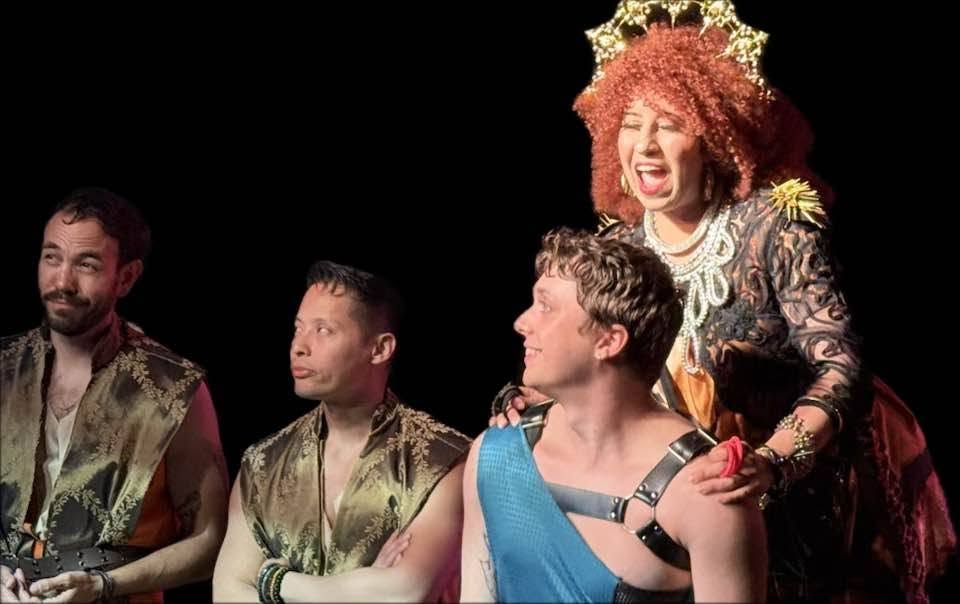
The SF Eagle, August 4, 5, 11 & 12, 2026. Directed by Andrew Calabrese, Lighting by Cornelius Green, Costume Design by Manny Santos, Sound Design by Larry Tasse, Stage Managed by Linda Huang. Cast: Jake Gleason (Encolpius), Jordan Ong (Ascyltos), Raymond Harris (Giton), Willow Hour (Tryphaena/Psyche/Oenothea), Edna Mira Raia (Circe/Fortunata/Pennychris), David Hyman (Trymalchio/Quartilla/Lychas), Carl Lucania (Satyr/Triton/Priapus/Eumolpus).